

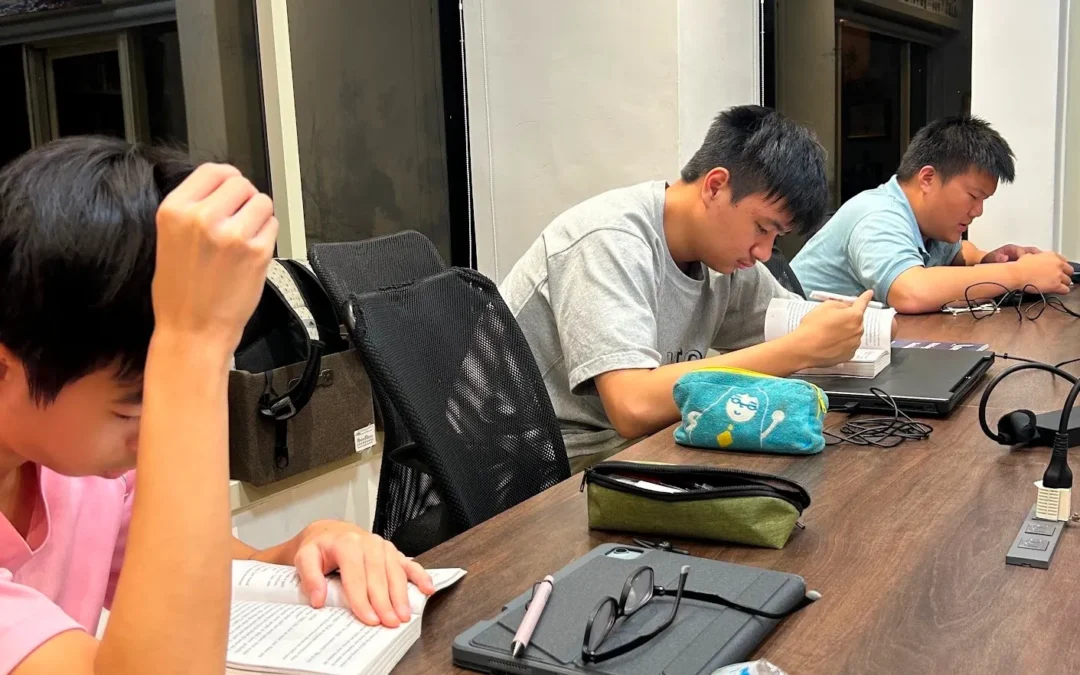
One of the best parts of being a teacher is getting to read books with students. I have read all of these books many times now, but every time I read a novel with a class it’s like reading it for the first time. I always remember something I forgot, find something I had missed, and change my mind about an opinion I had formed. But even better, I get to see kids start reading with doubt, and then struggle, and then enjoyment, and then they light up and see a novel for its depth – and that is a wonderful thing to behold.
Still, some novels tend to go over better than others. In my experience as a teacher, the following seven books end up on junior high kids’ list of favorites. For each of them, I have provided my estimated grade level range, give or take a year, a few analytical notes about the texts, and some questions teachers and parents can ask to prime kids for reading and discussion.
Some of these books can be easy reads for some middle schoolers, but just because a text has a lower Lexile or kids think they can get through it quickly doesn’t mean there isn’t depth and high-level analysis they can engage in.
I also recommend that students read these books at Englist (or with another teacher). Sure, all of these books are perfectly readable on their own, but because they’re all popular we get parents who tell us “my student has already read that.” This is a pet peeve because, as I have said a gajillion times now, there is a lot to be gained from re-reading. But also, reading a novel on your own and having the support and scaffolding of a skilled teacher to walk with you through the narrative are entirely different experiences. I cannot tell you how many kids have told me they have read a book, didn’t enjoy it, only to then decide that book is now their favorite after we dig into its depth together.
So, absolutely buy these books and have them at home and have kids read them, but also try to put your kids in classes where they can share in the reading experience with a teacher.
7 great books for middle schoolers we read at Englist:
7. Hatchet
6. Kira-Kira
5. Wonder
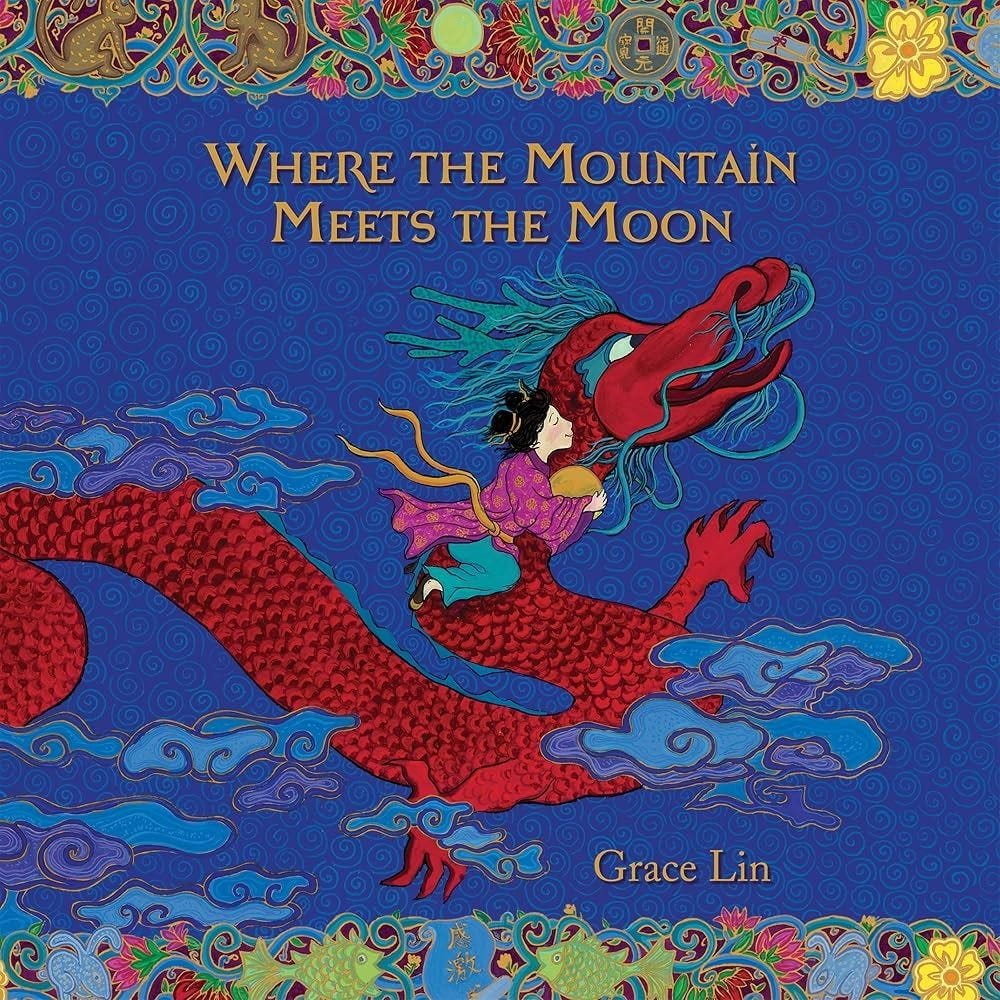
4. Where the Mountain Meets the Moon
3. The Outsiders
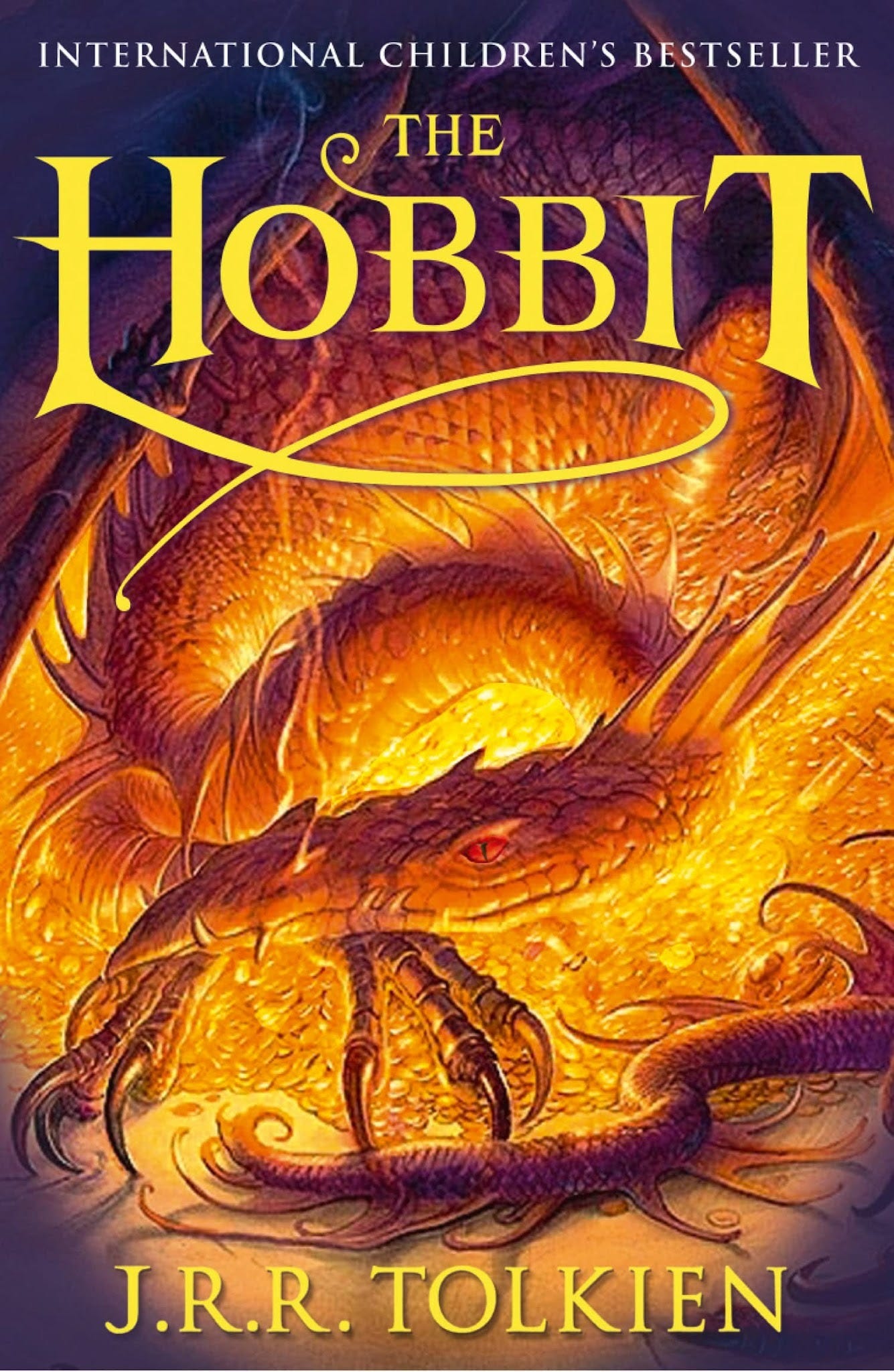
2. The Hobbit
1. The Giver
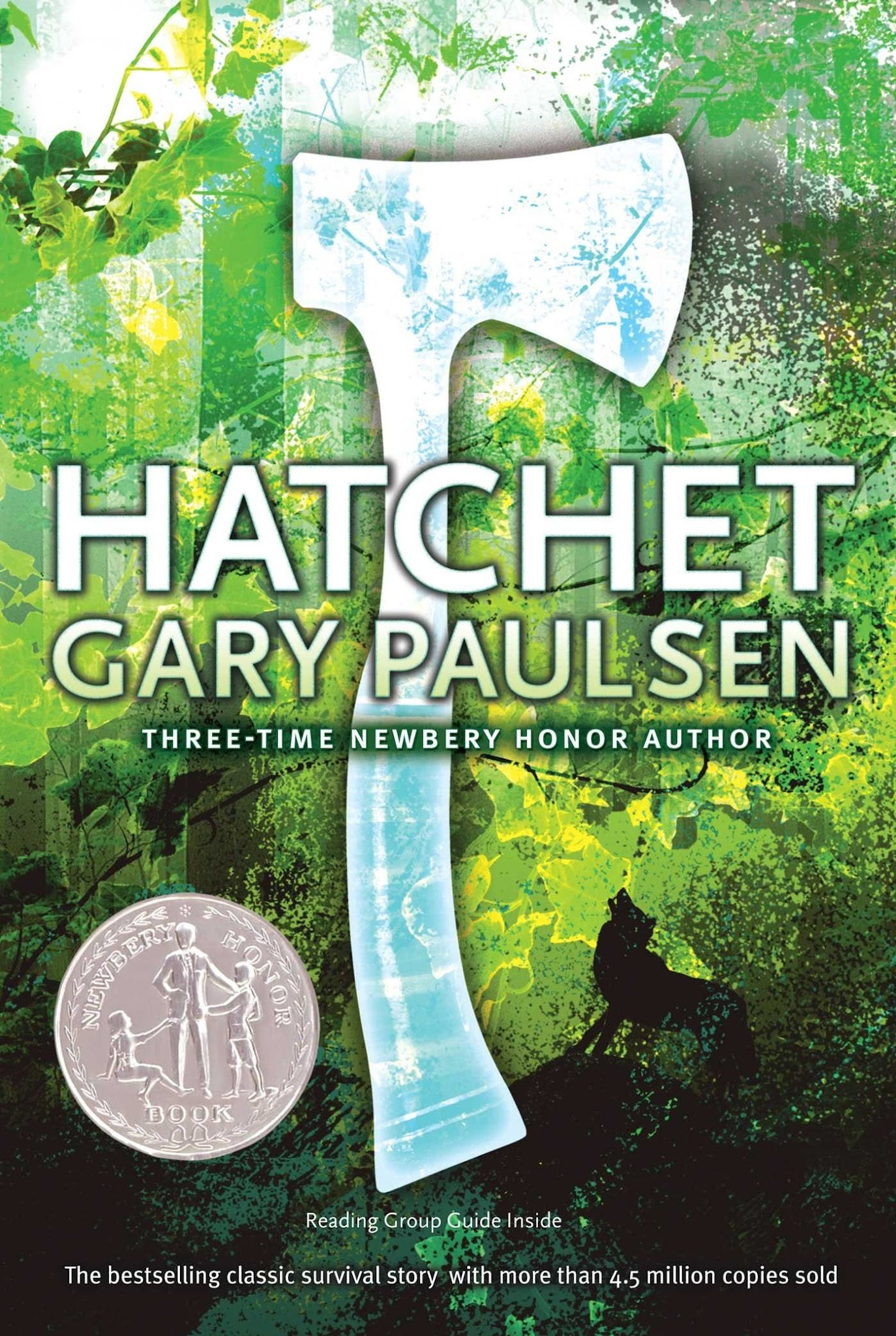
7. Hatchet
Gary Paulsen | Grades 5-8
Hatchet is about a boy named Brian who takes a small plane to see his dad in the north of Canada, but the plane crashes and Brian survives. Brian struggles both to stay alive in the hard northern wilderness and come to terms with his harrowing circumstances. Brian faces porcupines, poisonous berries, bears, tornadoes, and, worst of all, a moose. Well, maybe the tornado is the worst. Regardless, Brian has a hard time, but kids get hooked reading about how he manages to survive and stay sane.
Sometimes girls shy away from Hatchet because it’s boy-coded: an outdoorsy adventure all about stoic inner reflection with almost no dialogue and only one minor female character. But it’s also a wonderful slow burn of a read that requires thoughtful consideration. And the stakes are high enough that the drama is as engaging as anything you’ll find on a middle school bookshelf.
Some questions for readers:
-
Is Brian lucky? Consider the whole picture of what happened to him.
-
Although he almost dies a few times, Brian comes to love the wilderness. Why do you think this happens?
-
What is the main reason Brian is able to stay alive for so long? Why do you think this feature is so important?
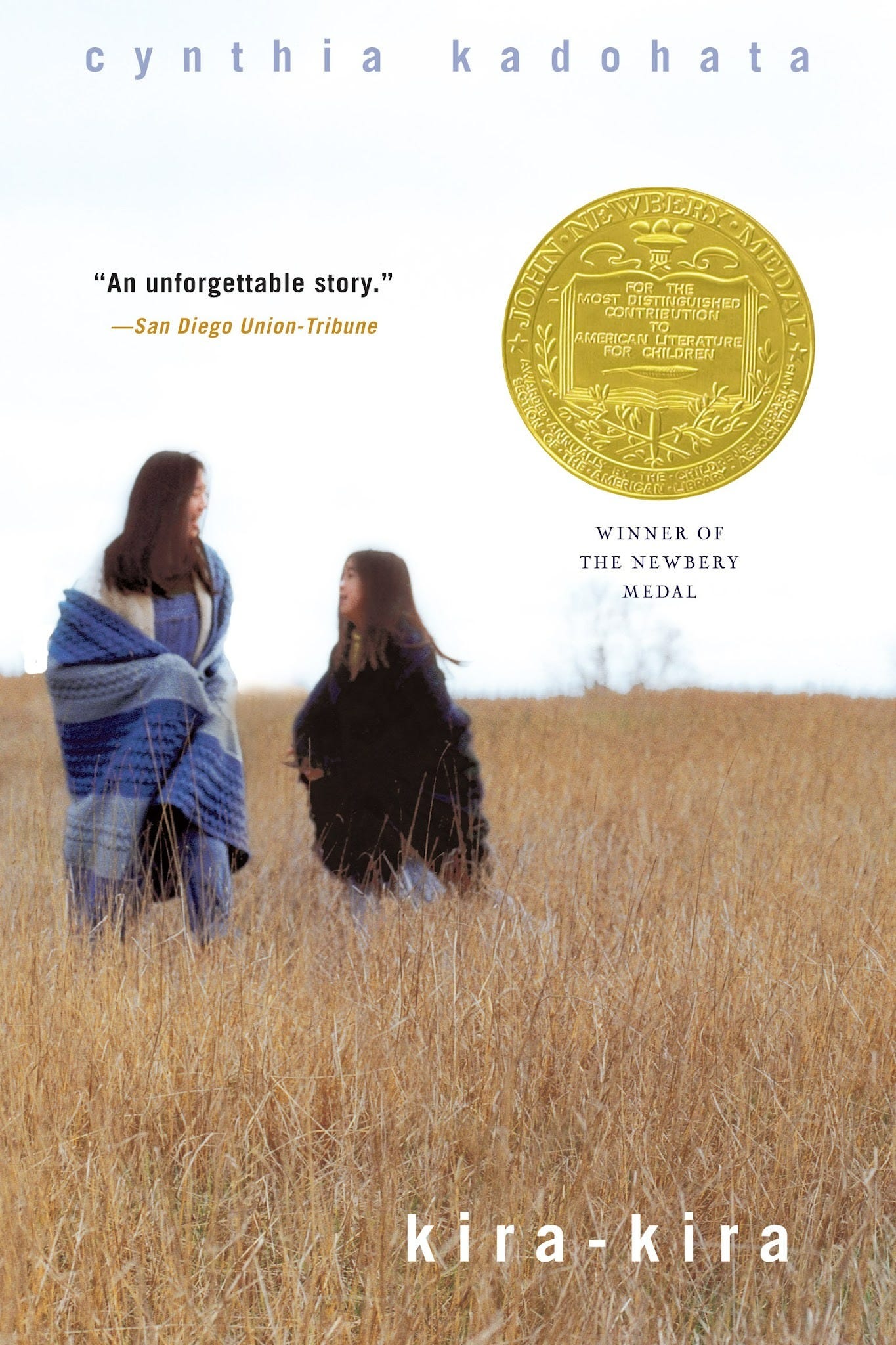
6. Kira-Kira
Cynthia Kadohata | Grades 5-8
Do you enjoy crying your eyes out? Because you’re going to. Kira-Kira lives up to its name (the title means “shining” in Japanese), but oh man is it sad. Katie Takashima lives with her Japanese American family in Georgia and looks up to her wise and mature older sister, Lynn. But as Lynn gets older and finds teenage interests, life takes a hard turn for her and Katie.
While the story moves slowly and is heartbreaking, it is fiercely beautiful. I love this novel because it can be the first time a student is moved by tragedy and helps them develop an appreciation for some complex and contradictory emotions. I read this for the first time as a grown man and I teared up, but I will always recommend it. My students liked it more than I did, with a number of them citing it as their favorite book.
Beyond the narrative, the writing is crisp and clear, and teachers can use it to point out powerful description and scene creation. Furthermore, the Asian American experience presented in the book can make it more relatable to immigrant students or kids outside of the US.
Some questions for readers:
- How are sadness and beauty connected?
- Why does Lynn impart the meaning of “Kira-Kira” so strongly to her sister?
- How does the fact that Katie and Lynn are Asian American impact their place in American society in the novel?
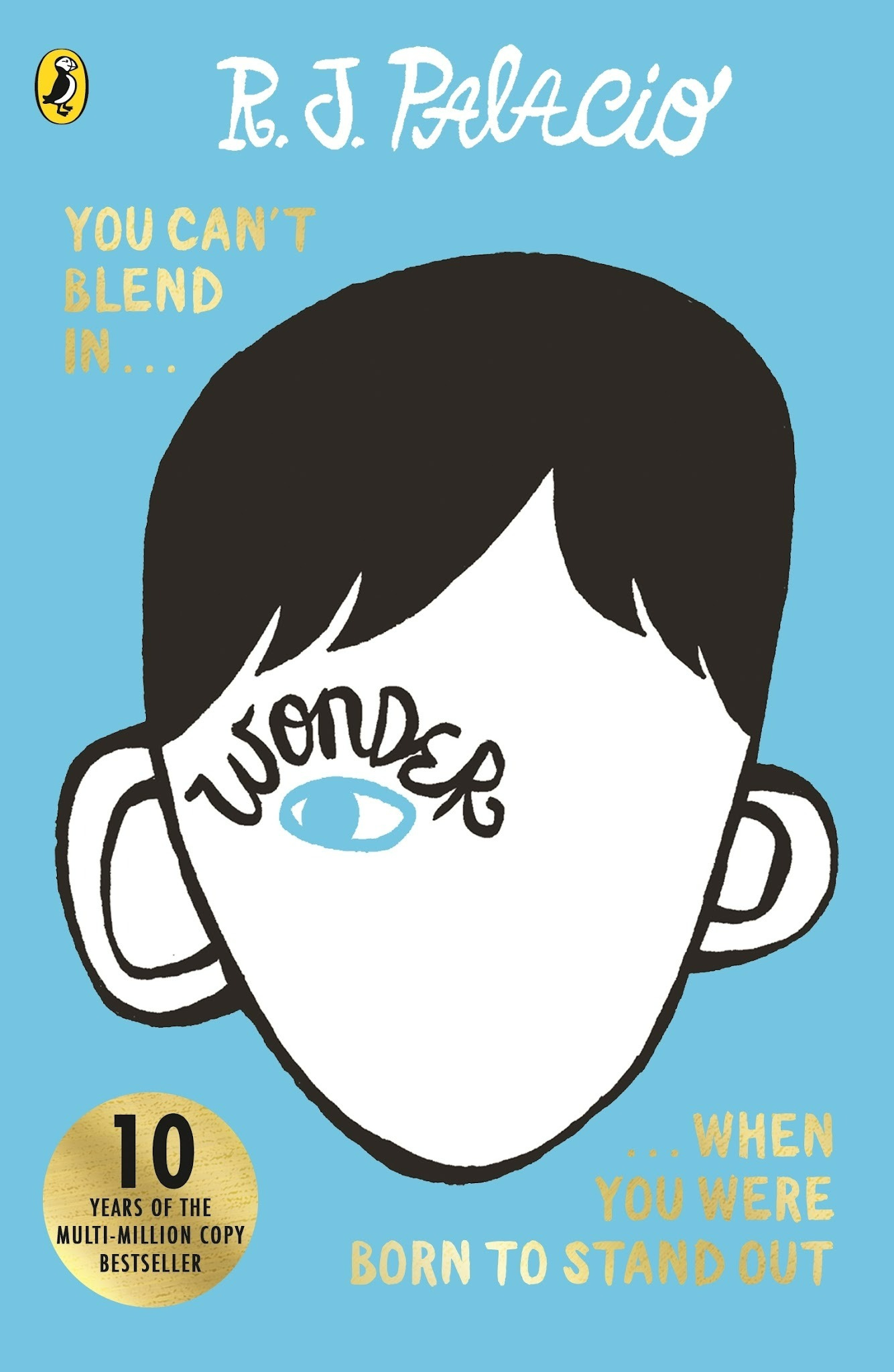
5. Wonder
August – better known by his friends as Auggie – has Treacher-Collins Syndrome. In short, that means his face is different from most people’s. People with TCS have faces with a distinct, drooping set that can be surprising at first glance and can come with some medical issues, but beyond that it’s mostly a superficial condition. However, because it’s relatively rare and because it clearly sets you apart – and because kids are mean – Auggie is scared to start normal school as a fifth grader. Still, Auggie is uniquely brave and goes to regular school anyway. He not only navigates the difficult world of pre-adolescence, but comes to form strong friendships and become a standout personality and student who is not defined by his “condition”.
There are parts of Wonder that make you want to cheer out loud. It’s a fundamentally kind text that offers a more authentic role model than we are used to in children’s fiction. Furthermore, the book is complex. I mean, it’s not so complex to read (it’s manageable for fifth graders), but the characters are deep and have varying and dynamic motivations for their behaviors, and this complexity helps middle school-aged kids come to terms with the growing complexity of their own lives. You’d think regular Taiwanese kids wouldn’t be able to relate so much to a kid with TCS living in New York, but relate they do, and that’s the power of this novel. Kids see themselves in the characters – not just in Auggie, but his older sister, his friends, and even his enemies. Being able to dig into the character development is what makes this such an important novel for a middle school classroom.
Some questions for readers:
- Have you ever behaved in a way you wish you hadn’t because of peer pressure? How so?
- Are the characters who treat Auggie poorly bad people? Or are they more complicated? Why?
- Why does the author write the book from the perspective of different characters? What does that add to the narrative?
4. Where the Mountain Meets the Moon
Grace Lin | Grades 5-7
Speaking of fundamentally kind novels, I love Where the Mountain Meets the Moon so much. Minli is a poor girl from a poor village in China, but she is a dreamer at heart, and her dreams meet her determination to drive the story. This novel is rooted in Chinese folklore but written by a Chinese American author, so it will resonate with just about everyone. Minli’s innate innocence and positivity put her on a journey where she befriends a hapless dragon, guardian lions, and kings, but she eventually finds herself questioning the master of fate who lives on the moon and has to choose between her own fortune and the needs of those she loves.
Part of what makes Where the Mountain Meets the Moon so good is its basis in Chinese folklore. This is a fantasy novel, but the fantasy elements seem coherent and grounded relative to a lot of other children’s fantasy, and I think it’s because it has such strong roots. The language is breezy and the story is fun, but there is a lot of life in the setting. The characters are also strong, and the symbolism is obvious enough for young readers to spot, but nuanced enough to be worth analyzing. This novel is probably the easiest on this list, but that’s a positive for me. I think kids should read it once in elementary school and once before high school and compare their perspectives; Where the Mountain Meets the Moon can be a lodestone of children’s literature and a way for students to reflect on where they have been and where they are going.
Some questions for readers:
-
Minli is such a dreamer in part because of the stories her Ba tells her. What is the author saying about the importance of stories and dreams in our lives?
-
What is the author saying about the value we place on wealth compared to the value of our relationships and principles?
-
What causes the green tiger to be so angry and hateful? How do Minli and Dragon compare as characters to this antagonist?

3. The Outsiders
The Outsiders is a quintessential teen novel, and like with Wonder, it’s moving to see modern kids in Taipei identify so closely with a bunch of “greasers” from 1950s Oklahoma. The book is narrated by Ponyboy Curtis as he recalls his harrowing journey beginning as an orphan bullied by rich kids to a fugitive on the run with his best friend when they share in an unintentional but terrible crime. The Outsiders is probably the most dramatic novel on this list, which is part of why the movie from the 80s was so popular. There is drinking and smoking and brawls and fast cars and murders and suicides and escapes and gymnastics. Kids just dig it.
But at its core, it’s a deep coming-of-age narrative that explores the dynamics between the “haves” and the “have-nots”, the fragility of youth and innocence, and death that has come too soon. The Outsiders is as sad as Kira-Kira, but perhaps even more packed with wisdom and angst, along with a faster pace and more action.
Perhaps the reason why it’s so authentically teenaged, even across time and geography, is because S.E. Hinton wrote The Outsiders while she was a high school student – it was published the day of her graduation. It’s also the most difficult novel on this list; it relies heavily on dated slang and cultural references that adults today would have a hard time placing, much less Taiwanese teenagers. Still, if they can read it with a teacher and give it the attention it deserves, almost invariably kids come to love it.
Some questions for readers:
-
Cherry Valance says to Ponyboy, “Things are rough all over.” With this in mind, compare and contrast how things are rough for the Greasers versus the “Socs”.
-
Johnny commits a terrible crime. Is he justified? If so, why did he run?
-
Ponyboy has a different personality from his brothers and friends but a similar personality to Cherry Valance. What does this say about social status and teenage cliquishness?
2. The Hobbit
J.R.R. Tolkien | Grades 8 and up
I must admit I am an irrepressible nerd and intolerable Tolkien fanboy, so of course I was going to put The Hobbit on a junior high reading list. However, The Hobbit rules. While The Outsiders is the most TV-drama-like, The Hobbit has the most action and is the most cinematic. While all of the novels on this list have cultural cachet, this novel is perhaps the most famous. It remains my favorite gateway into the world of fantasy fiction, but it is also a complex and multifaceted narrative that is an exemplar of worldbuilding, character development, and deployment of symbols and tropes.
Bilbo Baggins is a hobbit who gets roped into an almost stereotypical fairy tale adventure to confront a dragon. The predictability of the narrative falls away as his journey progresses, and the timid homebody Bilbo has to become an unexpected leader and hero. Along the way he realizes just how big his world is, and how small he is in it, but also that the smallest can have the most impact.
Does that last sentence sound cliche? It probably does, but only because Tolkien is the original source of so much that is now cliche. In my experience, teenagers find The Hobbit anything but trite, although it is one of the more difficult texts on this list due to its age and the datedness of some of the language. However, Tolkien is also arguably the most masterful writer on this list, and so while the language can seem a little old, it is also beautiful and universal. Like The Outsiders, The Hobbit is a worthwhile endeavor if readers stick with it.
Some questions for readers:
-
Bilbo is the hero of The Hobbit, but in what ways is he heroic, and how is his heroism different from more stereotypical heroes of fantasy?
-
Bilbo is torn between being a Hobbit who likes to stay at home and relax, and wanting to see the world and have an adventure. How does this dynamic help Bilbo grow as a character?
-
Many readers feel that Middle Earth, the world of The Hobbit, is as much of a character as anyone else in the story, Bilbo and Gandalf included. What does it mean that Middle Earth is a character in this narrative, and do you agree or disagree?
1. The Giver
I cannot overstate how much I appreciate and enjoy The Giver. Obviously as a fan of books, I enjoy it personally. But as a teacher, there is not a better novel with which to initiate students into the world of literature and active reading and critical analysis.
The Giver is a sci-fi dystopian novel in the same vein as Nineteen Eighty-Four and Fahrenheit 451. The Giver is easier than those books and directed at younger teens, but I find it to be equally deep and more emotionally resonant than even those masterworks. The protagonist, Jonas, is a 12-year-old boy living in an unsettlingly idyllic “community”. His community selects him to be the new “Receiver of Memory” on their behalf. His new job entails absorbing memories of the past that the rest of the community has chosen to forget and ignore. Jonas and his mentor, the Giver, alone must shoulder the crushing burden of human history. The novel picks up as Jonas decides that perhaps the community is more flawed than he realized.
The Giver is a slow burn. There is very little “action” as we know it. The novel is largely Jonas’s inner monologue and observations of his world. This can be a huge change of pace for teen readers used to novels-meant-to-be-movies, but with a little framing and guidance, kids come to appreciate the change.
There are a few specific chapters I have a hard time reading with the class because I will cry. There are also scenes where I get goosebumps reading about the bravery and sacrifice of the characters. Jonas’s character development is ringingly powerful and watching students internalize the messages and implications of the narrative is why I will always teach this novel, even if I am teaching high school or college kids.
I love The Giver, and your kids will too.
Some questions for readers:
-
The community is a bizarre setting, but it has some similarities to places in the real world. What places share features with the community? Why are they similar?
-
More importantly, think hard about your community, city, and nation. Is it so different from Jonas’s community? In what ways is our world more like the community than we would like to admit?
-
The author’s use of language plays a huge role in The Giver. Why does the author use words and phrases like “release” and “family unit” and “peer group” instead of more direct terms? What is the author saying about the relationship between language and our societies?
-
What is the author saying about the importance of history and understanding the consequences of the past, even if they are painful?
–
And be on the lookout for my high school book recommendations coming soon (hopefully). If you want more book recommendations of different genres, let me know. These are fun to write.
Mr Hatch